In the high-stakes world of professional baking and industrial confectionery, supply chain management is just as important as the recipe itself. For decades, liquid dairy cream was the standard, but it came with a heavy price tag: the absolute necessity of an unbroken cold chain. A single hour on a hot loading dock could ruin an entire shipment. Today, however, the industry is undergoing a silent revolution. Bakeries in emerging markets, export-focused manufacturers, and cost-conscious patisseries are increasingly adopting whipping cream powder (often known as Chantilly powder) as their primary decorating medium.
Turkey has emerged as a global powerhouse in the production of these dry mixes, and PMF (Pastry Material Factory) stands at the forefront of this innovation. We have engineered a product that resolves the headache of logistics without compromising the luxurious mouthfeel and stability required for high-end cake decoration. In this article, we will dismantle the myths surrounding powdered creams and explore the tangible commercial benefits of making the switch.
Why Whipping Cream Powder is the King of Logistics
The most immediate advantage of using a powdered base is logistical freedom. Liquid creams contain a large percentage of water, which makes them heavy to ship and prone to bacterial spoilage if not kept constantly refrigerated. This reliance on “reefer” (refrigerated) containers skyrockets shipping costs and limits where you can source your ingredients.
Whipping cream powder eliminates water from the equation until the moment of use. This seemingly simple difference has profound implications:
- Ambient Storage: PMF’s powder can be stored in standard dry warehouses at room temperature for up to 18-24 months. You stop paying for expensive freezer space.
- Shipping Efficiency: You are transporting concentrated product, not water. A pallet of powder yields significantly more final volume than a pallet of liquid, drastically reducing your freight cost per cake.
- Zero Waste: With liquid cartons, once opened, the clock starts ticking. With powder, you weigh out exactly what you need for the day’s production and reseal the bag. The rest stays fresh, eliminating the “open carton” waste that plagues many kitchens.
Customizable Texture and Flavor Profiles
One of the common misconceptions about powdered mixes is that they are rigid or “one-note.” On the contrary, whipping cream powder offers a level of versatility that liquid creams cannot match. Because the baker controls the hydration process, the outcome can be tailored to the specific application.
By adjusting the liquid-to-powder ratio, a chef can create:
- A Stiff Peak: Perfect for intricate piping, flowers, and high-detail borders that need to hold their shape for days.
- A Soft Peak: Ideal for coating cakes (masking) or filling profiteroles where a lighter texture is desired.
Furthermore, you are not limited to mixing it with water. Innovative chefs mix PMF powder with cold fruit juices, coffee, or milk to create flavored creams instantly, without adding extra moisture that might destabilize a liquid cream. This flexibility allows for rapid menu innovation without stocking dozens of different flavored products.
Climate Resilience: Built for the Heat
For bakeries operating in the Middle East, Africa, or Southeast Asia, ambient heat is the enemy of cake decoration. Dairy fat has a low melting point, causing traditional creams to “weep” or slide off the cake when displayed in non-refrigerated environments or during transport to the customer.
PMF’s whipping cream powder is formulated with high-quality vegetable fats and stabilizers designed for thermal shock resistance. Once whipped, the foam structure is incredibly robust. It locks in air bubbles and resists collapsing even in warmer kitchens. This reliability ensures that the wedding cake you deliver looks just as sharp and pristine at the reception as it did on your finishing table.
The Economics of Yield (Overrun)
We previously discussed “overrun” (the increase in volume) in the context of vegetable liquids, but powders take this economic advantage a step further. A high-quality whipping cream powder from PMF is designed to absorb a significant amount of liquid.
Depending on the specific formulation and mixing speed, 1kg of powder can be mixed with 2 to 3 liters of cold water (or milk) to produce 4 to 5 liters of finished cream. When you calculate the cost per liter of the finished, whipped product, the savings compared to buying ready-to-whip liquids are substantial. For industrial manufacturers producing thousands of units daily, this yield efficiency directly boosts the bottom line.
PMF Quality: Pure White and Silky Smooth
Not all powders are created equal. Lower-quality mixes often result in a yellowish tint or a gritty, sandy texture that feels unpleasant on the palate. At PMF, we utilize advanced spray-drying technology and micro-milling to ensure our powder is ultra-fine.
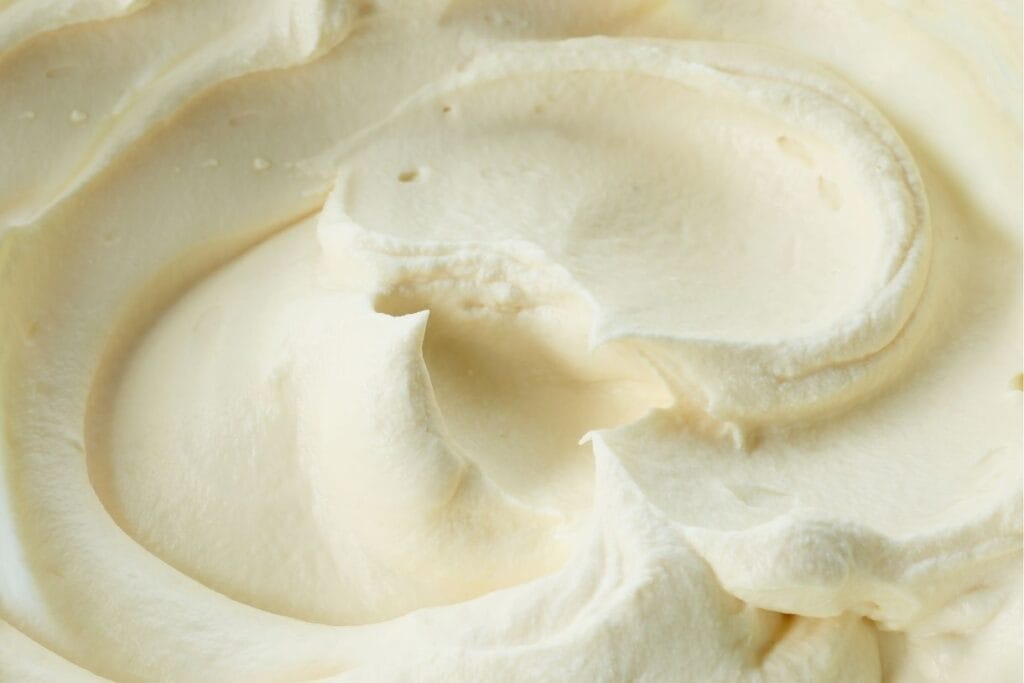
The result is a brilliant, snow-white cream with a silky, smooth mouthfeel that rivals fresh dairy. This pure white base is also a canvas for color; it takes gel food coloring exceptionally well, producing vibrant, true-to-tone hues without the need for excessive dye.
Conclusion: The Smart Solution for Modern Bakers
The transition from liquid to whipping cream powder is not just about cutting costs; it is about gaining control. Control over your inventory, control over your waste, and control over how your product behaves in the heat.
PMF invites professional bakers and distributors to test our range of Chantilly powders. Experience the freedom of a product that waits for you, performs under pressure, and delights your customers with every bite. It’s time to modernize your pantry with the stability and quality of Turkish engineering.